Why Real Customer Stories Convert Better Than Sales Pitches
The Psychology Behind Story-Based Video Testimonials
When it comes to creating videos that convert, few formats are as powerful as the story-based testimonial. Unlike traditional product reviews or pitch-style videos, these real-life customer stories don’t sell with stats. They sell with something far more powerful: emotion, trust, and relatability.
In this post, we’ll unpack the psychology behind why story-based testimonials work so well — and why you should consider them in your next campaign.
But, what is a story-based testimonial?
A story-based testimonial is more than just someone saying, “I liked this product.”
It follows a narrative arc: I had a problem → I struggled → I found this solution → Things got better.
It’s real, human, and rooted in lived experience — and that’s exactly why it works.
1. Narrative Transportation = Lowered Resistance
When a viewer is immersed in a story, they experience what psychologists call “narrative transportation.” It’s that feeling of getting pulled into someone else’s world.
Why it matters:
- It lowers mental defences and scepticism
- Viewers become more open to the embedded message
- Your product’s impact is understood through context, not explanation
Bullet overlay idea:
Storytelling = cognitive bypass to trust
2. Mirror Neurons Create Emotional Connection
When we see someone on screen experience joy, relief, or pain, our brains light up as if we’re experiencing it too. That’s thanks to mirror neurons — the biological basis of empathy.
Why it works:
- Viewers “feel” the emotion of the speaker
- Emotional resonance creates deeper connection
- Empathy leads to belief in both the problem and solution
Bullet overlay idea:
If they feel it, we feel it — and we trust it.
3. The “That Could Be Me” Effect
This is where the real magic happens. When the storyteller is relatable, viewers project themselves into the narrative.
They connect the dots: “If it helped them, it might help me.”
Result
The product feels personal — not promotional.
Bullet overlay idea:
We trust people who feel like us.
4. Authenticity Always Wins
Unscripted. Unpolished. Honest.
That’s what audiences respond to in testimonials. In a world of overproduced ads, a candid story from a real person feels refreshing and believable.
Bonus
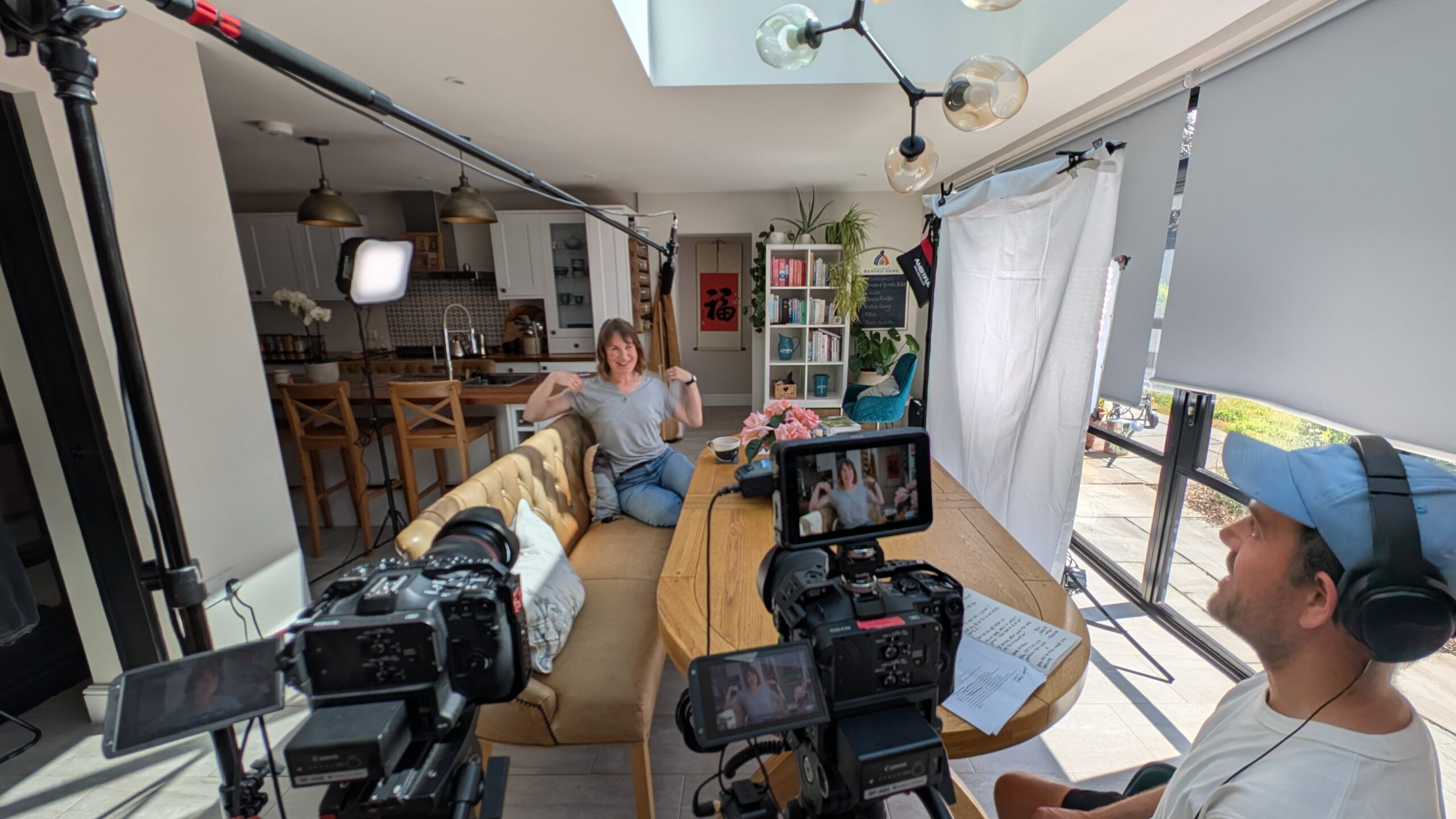
Tone of voice, body language, and eye contact all add layers of authenticity that text reviews can’t match.
Bullet overlay idea:
Real people > perfect scripts.
5. Social Proof in Motion
Seeing someone like you succeed with a product = validation.
According to Cialdini’s principle of social proof, we look to others when we’re unsure what to do. A video testimonial shows that “others like me” already made the leap.
Bullet overlay idea:
If they’re doing it — maybe I should too.
6. The Transformation Narrative
Every great testimonial follows a proven story arc:
Problem → Struggle → Discovery → Resolution
It mirrors the hero’s journey — the most emotionally resonant structure in storytelling.
Why it works:
- Feels cinematic
- Highlights real results
- Casts the product as the guide in the journey, not the hero
Bullet overlay idea:
Your product isn’t the hero. The customer is.
7. Emotional Priming
If your story makes someone feel inspired, safe, or hopeful — those feelings become subconsciously associated with your brand.
This is called emotional anchoring, and it’s incredibly powerful in industries like:
- Wellness
- Health tech
- Coaching
- Finance
- Education
Bullet overlay idea:
Emotion drives memory. Memory drives decisions.
8. Trust Transfer
If viewers trust the storyteller, they’re more likely to trust your brand. That’s why casting matters.
Choose customers who are:
- Relatable
- Clear communicators
- Naturally warm or confident
Viewer Reactions You Want
In user research, these are the kinds of reactions that indicate you’ve nailed it:
🗣️ “They said exactly what I’ve been feeling.”
🗣️ “It’s so good to see someone like me use this successfully.”
🗣️ “This just made it real for me.”
They reflect an emotional truth — not logic — and that’s what drives decisions.
Bullet overlay idea:
Trust is contagious.
Story-Based Testimonials vs. Rational Arguments
| Aspect | Rational Pitch | Story-Based Testimonial |
|---|---|---|
| Focus | Features and benefits | Lived experience |
| Appeals to | Logic | Emotion + identification |
| Processing | Active, effortful | Passive, intuitive |
| Memory | Often forgettable | Memorable + shareable |
| Tone | Salesy | Relatable + human |
Final Thought
The best testimonials don’t just tell you something works.
They make you feel like it could work for you.